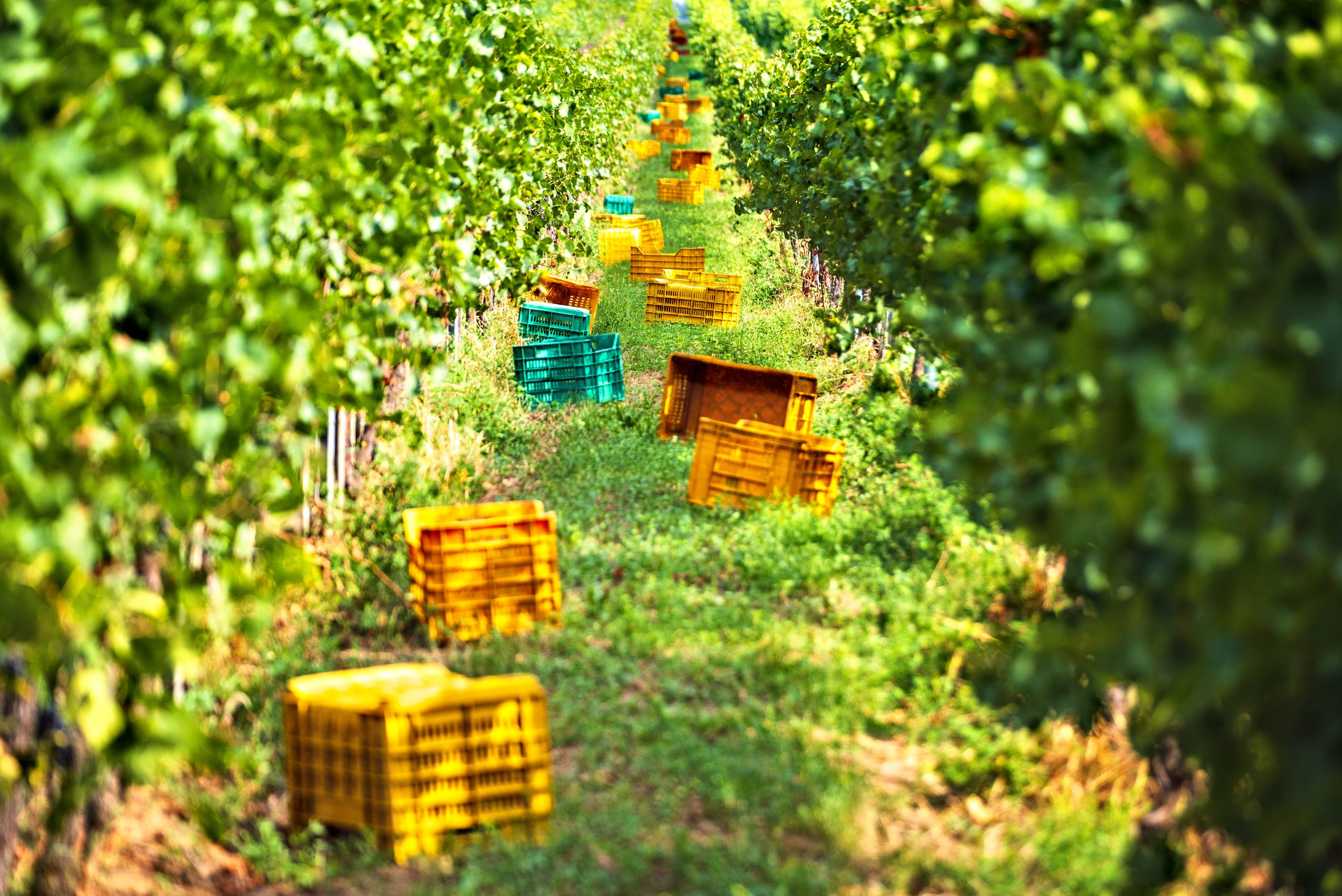
The 2026 Franciacorta harvest officially begins on 30 July in the areas of Gussago and Monte Orfano. For the first time, grape harvesting starts in July, an unprecedented event driven by the increasingly frequent climate fluctuations that require the region to respond swiftly and effectively in order to preserve both the crop and the quality of its wines.
This is the earliest harvest ever recorded in Franciacorta compared with the traditional harvest period, highlighting the need to closely monitor evolving weather conditions and, once again, demonstrating the region’s ability to adapt to an increasingly dynamic climate.
The early start of the 2026 Franciacorta harvest follows a growing season marked by weather patterns that demanded continuous monitoring and precise vineyard management.
The year was characterised by a succession of climatic events that required considerable adaptability. Following a winter with no significant temperature anomalies, a marked rise in temperatures between February and April accelerated vine development, bringing budbreak forward by more than a week compared with the historical average and making it necessary to organise the harvest earlier than usual.
During the spring, Franciacorta experienced several particularly intense hailstorms. The storms of 6, 11 and 14 May, followed by another event on 10 June, affected different parts of the appellation with varying degrees of impact. However, favourable weather conditions from mid-May onwards ensured good fruit set and a regular progression of the growing season.
Weather conditions continued to underline the exceptional nature of the vintage. May equalled the historical record for the number of days with temperatures above 32°C (89.6°F), while June ranked among the hottest months of the past twenty-nine years, making 2026 one of the warmest vintages in recent decades. Water availability was also below average: although early summer rainfall helped improve seasonal water reserves, cumulative rainfall as of 12 July remained 25% below historical averages.
High temperatures and limited water availability slowed vegetative growth during the latter part of the season, particularly in well-drained soils and younger vineyards, without compromising the grapes’ ripening process.
The daily work of Franciacorta’s winegrowers proved essential. By interpreting the specific needs of each vineyard and adapting vineyard practices to changing climatic conditions, they once again demonstrated the importance of human expertise—the knowledge and experience that remain fundamental to a prestigious appellation such as Franciacorta.
From mid-July onwards, weather conditions gradually changed. The return of rainfall, despite being accompanied by further hailstorms, helped restore water reserves, while temperatures returned to seasonal averages, allowing grape ripening to progress more evenly in the weeks leading up to the 2026 Franciacorta harvest.
“Nature sets the pace, and we adapt to its rhythm by carefully observing what happens in the vineyards and responding accordingly,” says Emanuele Rabotti, President of the Franciacorta Consortium. “This year, high temperatures and limited water availability accelerated grape ripening, leading us to bring forward the start of the 2026 Franciacorta harvest. Our deep knowledge of the territory and the daily commitment of our winegrowers enable us to approach every season with care and responsiveness, with the goal of preserving the quality of Franciacorta grapes and wines.”
As every year, the 2026 Franciacorta harvest marks the culmination of the work carried out throughout the entire growing season. It is a journey shared by wineries and winegrowers, who care for a territory capable of evolving alongside the climate while remaining firmly committed to quality, sustainability and the continued enhancement of the Franciacorta appellation.